The NeeDoh Hunting Craze — What Parents Need to Know About the Squishy Toy Obsession of 2026
If you have a school-age child, you've probably heard about it. Every afternoon pickup comes with the same urgent question: "Did you find one?" The squishy toy craze of 2026 has reached a level that's genuinely surprising even by toy trend standards. Stores including Target, Five Below, and specialty toy stores have seen long lines from shoppers hoping to get their hands on squishy toys, with some retailers limiting purchases to one or two per customer. Parents are driving to multiple stores. Kids are swapping them like trading cards. Teachers are confiscating them during lessons — and children are smuggling them right back in the next day.
So what exactly is going on? And more importantly — should you be trying to get your child one of these toys, or is this just another short-lived craze? Here's the complete picture.
What Is the Squishy Toy Craze of 2026?
The current wave of squishy toy mania centers on a few key product types that have gone viral through a combination of TikTok content, school word-of-mouth, and genuine scarcity. The squeezable sensory toys are used for stress relief and focus, driving demand across kids and adults alike.
Slow-Rise Foam Squishies
The classic category that started it all — soft polyurethane foam toys shaped like food, animals, and kawaii characters that slowly return to shape after being compressed. "Squishy fidget toys" reached an all-time high search interest of 100 in February 2026 , making it one of the most searched toy categories globally. These come in everything from realistic avocados and bananas to adorable bears and cartoon characters, and the satisfying slow-rise behavior is the defining feature children and adults find irresistible.
Squishy Dumplings
Glitter-filled dumpling squishies have become a viral hit, with RMS USA reporting they sell out "within the hour" after restocks. These small, round toys filled with shimmering glitter have a particularly devoted collector following — children trade them, collect specific colors, and photograph them for social media with the same enthusiasm previous generations reserved for Pokémon cards.
Why Schools Are Seeing This
The school environment has become the primary driver of squishy toy demand in 2026. Children see classmates with them, want one, tell parents, parents search stores — and the cycle accelerates. Kids collect them, swap them, squeeze them, and try to keep them out of teachers' sight so they don't get taken away. This element of mild rule-bending has actually amplified the appeal — there's something about a toy that teachers might confiscate that makes it approximately twice as desirable to a 9-year-old.
Are Squishy Toys Actually Good for Children?
This is the question every parent asks second (after "where do I get one?"), and the answer is genuinely positive. Squishy toys aren't just a trend — they provide real developmental and emotional benefits that researchers and educators have recognized for years.
Sensory Regulation and Focus
The rhythmic squeezing action of a squishy toy activates proprioceptive receptors in the hands and fingers, providing calming sensory input that helps regulate the nervous system. For children who struggle to sit still or maintain focus, having a quiet tactile outlet actually improves attention rather than reducing it. This is why many occupational therapists and classroom support specialists actively recommend sensory toys as tools for children with ADHD, sensory processing differences, and anxiety.
Fine Motor Development
Squeezing, stretching, and manipulating a squishy toy provides ongoing fine motor exercise that strengthens hand muscles and improves dexterity. This is the same kind of hand strength work that supports handwriting, cutting, and other classroom tasks. A child who spends time squeezing a squishy is inadvertently doing hand strengthening exercises that support their academic work.
Emotional Regulation
Children experience stress — social dynamics, academic pressure, transition anxiety — in ways that adults sometimes underestimate. Having a small, comforting sensory tool that a child can squeeze when they feel anxious or overwhelmed gives them a self-regulation strategy that's portable, silent, and immediately accessible. Many teachers who've worked with squishy toys in classrooms report that children who use them appropriately show noticeably calmer behavior during difficult moments.
How to Choose the Right Squishy Toy for Your Child
Age Considerations
For children under 3, choose only large squishy toys with no small detachable parts. The choking risk from small squishies is real for this age group, and large options — like a jumbo strawberry or avocado squishy — are completely safe and actually provide better sensory input through their size. For children 3 and up, the full range of squishy options is appropriate with normal supervision.
Matching the Child's Sensory Profile
Children who are sensory seekers — who love rough and tumble play, firm hugs, and intense physical input — tend to do better with firmer, crunchier squishies or larger options that require more force to compress. Children who are more sensory sensitive — who prefer gentle touch and find intense stimulation overwhelming — tend to prefer softer, smoother, ultra-slow-rise options. When in doubt, let your child choose from a selection of textures. Their instinctive preference is a reliable guide to what their nervous system actually needs.
What to Look for in Quality
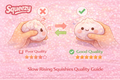
Not all squishies are equal. The defining quality marker is the slow-rise behavior: compress the toy completely flat and time how long it takes to return to shape. A quality squishy should take 8–15 seconds to rise fully and evenly. It should have no strong chemical smell, paint that doesn't rub off, and foam that returns completely to its original shape without leaving any compressed areas. Cheap squishies fail all of these tests within weeks — which is why buying quality once is significantly better value than replacing cheap alternatives repeatedly.
Talking to Your Child About Squishy Toys at School
Given that schools have varying policies about toys in classrooms, it's worth having a brief conversation with your child about when and how to use their squishy at school. The most helpful framing is: it's a tool, not just a toy. When they need to focus during a lesson, or when they feel anxious before a test, a quiet squeeze in their lap can genuinely help. But waving it around during class or using it to show off to friends is what gets it confiscated — and that's fair.
Most teachers in 2026 are familiar with and generally supportive of sensory tools when they're used appropriately. A note to the teacher explaining that your child uses a small squishy toy as a focus tool is often well received — and prevents the confiscation cycle.
Frequently Asked Questions
Why are squishy toys so hard to find right now?
The viral nature of the 2026 squishy craze has created genuine supply shortages in physical retail stores — demand is outpacing supply for the most popular brands. Online stores like Squeezy Store maintain broader and more consistent availability than physical retailers, making online the most reliable source for the toys your child is looking for.
How many squishy toys does a child actually need?
One or two quality squishies is typically enough for practical use. If your child becomes a collector, a small curated collection of 5–10 is perfectly reasonable and provides the variety that maintains sensory interest over time. There's no functional benefit to having dozens — at that point, it's pure collection rather than sensory tool.
My child's teacher took their squishy — what do I do?
This is increasingly common. The most effective approach is a brief, friendly note or conversation with the teacher explaining the sensory regulation purpose and asking if there's a way for your child to use it appropriately — perhaps during independent work time or during transitions. Most educators are very open to this conversation when the purpose is clearly explained.
Are squishy toys safe for children with allergies?
All Squeezy Store squishies are made from non-toxic, BPA-free polyurethane foam. They don't contain latex, and the materials pass international safety standards. If your child has specific material allergies, check the product description for material details before purchasing.
Get Ahead of the Hunt
The squishy hunting craze shows no signs of slowing down. The squishy toy market, valued at $1.2 billion in 2024, is projected to grow to $2 billion by 2035 — and the current viral moment suggests that growth is accelerating faster than those projections anticipated. Rather than competing with other parents at sold-out store shelves, browse our full collection at Squeezy Store — always in stock, always premium quality, always free shipping on orders over $20.
Browse our full squishy collection and find exactly what your child has been asking for.
Meta Title: The NeeDoh Hunting Craze — What Parents Need to Know About Squishy Toys in 2026 | Squeezy Store
Meta Description: Every parent is hearing about it: NeeDoh hunting, squishy dumplings, slow-rise toys. Here's everything you need to know about the squishy toy craze taking over schools in 2026.